About this article
This article was originally written by EmLogic’s Director of Operations, Sven-Ingve Rasmussen, for the latest issue of Romfart, published by the Norwegian Astronautical Society. It is a professional summary of NUPI’s report on Norway’s participation in EU space activities.
It explores why space activities are becoming increasingly important to national security, preparedness and technological development, as well as Norway’s role in Europe’s space future.
This is an English translation of the original Norwegian article in Romfart.
Read the original Romfart article in Norwegian (PDF)
About the NUPI report
The article is based on NUPI’s report Når rompolitikk blir sikkerhetspolitikk: Norsk deltakelse i EUs romaktiviteter (When Space Policy Becomes Security Policy: Norwegian Participation in EU Space Activities, editor’s translation), prepared by Marianne Riddervold, Lars Gjesvik, Dorthea Gradek, Gine Lund Bolling and Claudia Aanonsen.
Read the full NUPI report here
Space has gone from being an arena for prestige projects to becoming some of society’s most critical infrastructure. Navigation, communication, environmental monitoring, transport and emergency preparedness all depend on satellites. This is true globally, and very much so for Norway.
A new report from the Norwegian Institute of International Affairs (NUPI) paints a clear picture:
Space policy is now security policy. For small states such as Norway, the choices we make over the coming years will be crucial for technological development, preparedness and our international footprint. The report assesses Norway’s participation in the EU Space Programme, with particular focus on the 2028–2034 period, during which the EU is planning a significant expansion of its activities.
This article provides an editorial and professional presentation of the key findings.
Norway is one of the world’s most space-dependent countries. Not because we launch astronauts, but because we:
The NUPI report highlights four space-based services in particular that are already defined as fundamental national functions (GNF):
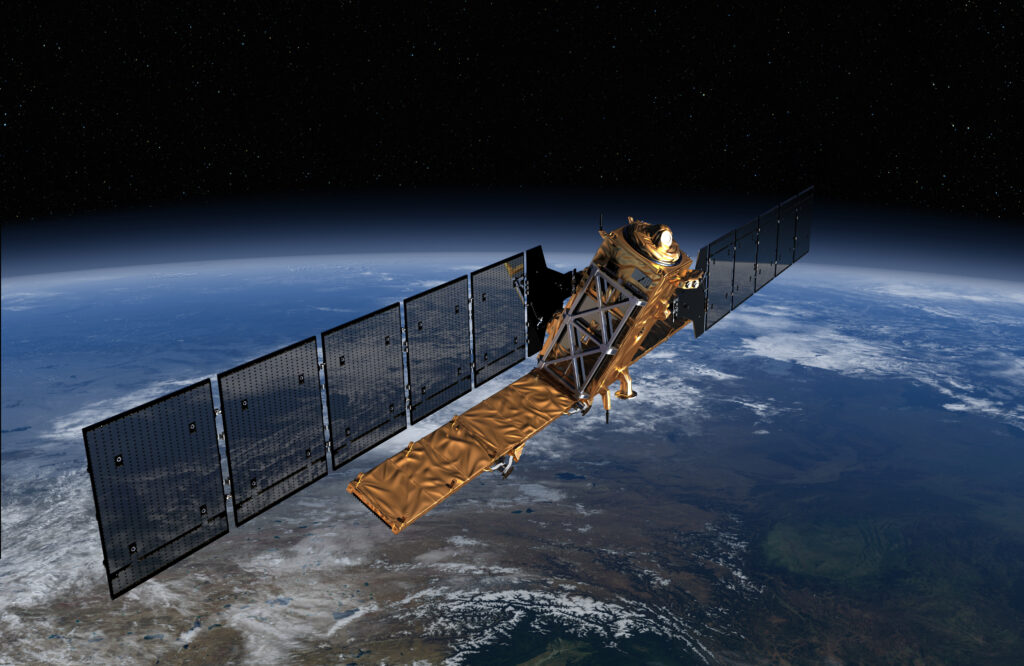
The report shows how space policy in Europe is now clearly moving into the sphere of security policy. There are several reasons for this:
For Norway, this means greater complexity, but also higher costs associated with remaining outside the European framework.

The report identifies several real challenges:
Pace of Technological Development
If Norway remains outside now, the country risks losing entire generations of technology, expertise and contracts.
The report is nevertheless crystal clear: there are no realistic alternatives that would provide Norway with the same level of access, security and industrial position.
NUPI assessed four alternatives to EU participation. On paper, several of them may appear promising, but closer examination makes it clear that none comes close to providing the same access to critical services, security or industrial position as cooperation with the EU.
ESA Alone
– Insufficient
ESA is becoming increasingly closely integrated with the EU, while the EU is taking over more of the governance. Whereas the EU previously used ESA as its “delivery arm”, over the past ten years the EU has gradually taken control of:
A Nordic Space Programme
On paper, Nordic cooperation could appear attractive. Denmark, Sweden and Finland have strong space capabilities. In practice, however, the idea falls apart for three reasons:
Bilateral Agreements in Europe
– Cooperation, but No Access to EU Space Services
Norway could strengthen direct ties with space nations such as:
Such bilateral agreements can provide access to individual projects, research and industrial development.
However, they have three major weaknesses:
Bilateral agreements can complement cooperation with the EU, but they cannot replace it.
The United States
– No Civilian Services, Greater Political Risk and Fewer Contract Opportunities
Norway has close ties with the US space sector, particularly in defence. The Americans are leaders in:
But this is also where the limitations lie:
The conclusion is clear: none of the alternatives meets Norway’s needs for services, security and industrial development.
The report leaves no room for doubt: Norway’s participation in the EU’s space activities is cost-effective, necessary and strategically sound.
The NUPI report concludes that Norwegian participation in the EU’s space activities is crucial for security, societal functions and industrial development. The main point is that Norway is deeply dependent on space-based services such as navigation, Earth observation and satellite communication, and that the EU is currently the only European actor providing these services in a stable, long-term and strategic manner. Remaining outside would mean weaker access to services that are essential for everything from preparedness in the High North to digital infrastructure throughout the country.
The report also shows that Norway itself is an important contributor to European space activities. The country’s unique geography, particularly in the Arctic, gives the EU access to ground stations, launch capabilities and surveillance capacity that few other countries can provide. This mutual benefit strengthens the case for continued close cooperation. If Norway were to withdraw, the EU would lose valuable resources, while Norway would simultaneously lose the opportunity to influence the development of services that are critical to national needs.
Another key message is that the alternatives to EU participation are weak. ESA cannot provide access to the operational services owned by the EU, the US has no civilian systems capable of replacing Galileo or Copernicus, and Nordic or bilateral solutions would be both technically and politically insufficient. By remaining outside, Norway would therefore lose both technological advantages and political influence, while vulnerability would increase in a world where space is becoming increasingly important to security policy.
Against this background, the report concludes that Norway’s participation in the EU’s space activities is clearly the most robust solution for securing access to space-based services that are critical to society, maintaining national security and strengthening the space industry. Non-participation would entail significant risks, higher costs in the long term and a weakened position in a Europe that is increasingly building its security and preparedness around space technology.
The NUPI report leaves a clear impression that space activities today are about far more than advanced technology and scientific exploration. They have become a central part of both the day-to-day functioning of society and the foundation of Norway’s security policy. Satellites provide services that society can no longer do without, and changes in Europe’s security situation make these services even more important. At a time when space is gaining increasing strategic value, it would be risky for a small country such as Norway to remain outside the structured and long-term cooperation frameworks the EU is now building around its space programmes.
The report also shows that Norway’s contribution to European space activities is significant. Through ground stations in the north, infrastructure in the Arctic and a strong space industry, Norway provides capabilities that the EU both needs and uses. This means that the cooperation is not a one-way process in which Norway merely receives services, but a partnership from which both parties derive real benefits. Remaining outside would therefore not only weaken Norway’s access to space services, but would also leave Europe with fewer critical resources, while at the same time reducing Norway’s influence over the development of services on which it depends.
Ultimately, the report concludes that participation in the EU’s space activities gives Norway the best possible foundation for remaining secure, prepared and technologically relevant in the decades ahead. The alternatives are either insufficient or considerably more expensive, and none of them can provide the same combination of access, influence and security as cooperation with the EU.
In a world where space is becoming increasingly important for everything from security policy to climate monitoring, Norway’s participation in EU space cooperation appears not as a choice between several equal alternatives, but as the most stable and strategically sound path forward.
Director Operations EmLogic AS